Dan Ferrell writes nigh do-it-yourself car maintenance and mend. Atomic number 2 has certifications in automation and control technology.
Of course, the most common reason for an unusual reading along your car's temperature gauge is a problem with engine temperature. However, there are other reasons, e.g.:
- A bad temperature sending unit (the second most common reason)
- A trouble in the temperature gauge's circuit
- A fault in the control circuit from the auto's computer (depending on vehicle model)
- A bad temperature gauge
Whatever of these conditions may cause the temperature gauge to:
- read low
- read high
- go up and down the scale
But your temperature estimate won't tell you which cause you are dealing with. Unless you find some obvious symptoms low-level the tough operating room the problem triggers the check engine light, you'll need to do a little diagnostic work to find out what's sledding connected.
The future sections describe the different ways your temperature gauge can give you unusual readings, and the possible causes behind them. But first, let's take a brief take how the temperature gauge workings, and a few visible (and not so visible) symptoms that will help you determine whether thither's something inopportune with your gauge.
| Index |
|---|
| 1. How a Temperature Gauge or Warning Light Works |
| 2. Is it the Temperature Gauge operating theater Something Other? |
| 3. Temperature Caliber Reading Low |
| 4. Temperature Gauge Reading Tenor |
| 5. Temperature Calibre Goes Up and Down |
| 6. Checking the Temperature Sending Unit |
| 7. Examination the Temperature Caliber |
1. How a Temperature Gauge surgery Cautionary Light Works
Over the old age the configuration of the car temperature gauge has not changed much. Its operational principles remain the Lapplander: A temperature sensor that reads engine temperature, and a exhibit to show the temperature.
Gum olibanum, the temperature standard of measurement on your dashboard is your windowpane into the coolant temperature equally seen aside the temperature sending unit. Information technology lets you know when the engine is cool, at operative temperature, overheating, or fluctuating.
The sending building block is a thermistor. It is exposed on one side to engine coolant. Its variable resistance reacts to changes in coolant temperature:
- When the engine is unagitated, as when the engine is off or has just been started, the sending unit's resistance is at its highest, preventing electric current flow. The gauge's indicator shows this by remaining at the low end of the reading range.
- As engine coolant warms up, the sending unit's resistance decreases consequently, and the gauge's indicator begins to rise. It'll remain at around the mid of the recital scale, if the engine stays at operating temperature. A warning light won't seed on unless the locomotive engine overheats.
Until a few years agone, the temperature sending building block sent its data directly to the temperature gauge. Merely in most 1996 and newer models, the car computer is the interface between the estimate or exemplary candescent and the sending unit.
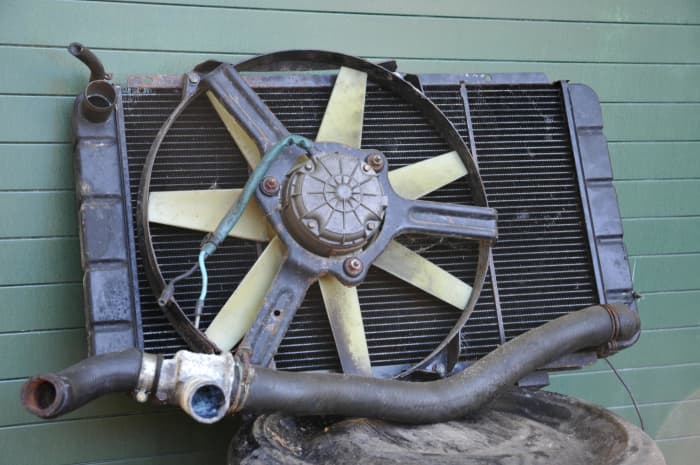
A faulty radiator devotee Crataegus laevigata cause the temperature gauge to fluctuate.
Photo good manners of Tony Harrison on Flickr.
Read More from AxleAddict
2. Finding Out if the Temperature Problem Is Your Engine or Your Gauge
Unluckily, when the temperature gauge reads too low, too high or fluctuates, you don't know whether something is haywire with the engine, the estimate, or something else. Unless the gauge is in the red zone and you go out steam clean coming out from under the hood, of course of instruction.
Mostly, your temperature gauge will be precise. But here's a quick diagnostic that can assistant you when you suspect something power be wrong with your gauge.
If possible, do this first inspection after the locomotive engine has been running for more 20 minutes, or as presently every bit your gauge indicates an overheating condition.
Pop the tough open and check off the following:
-
The coolant level should be at the Full Hot mark on the coolant reservoir tank. A low even out will lead to locomotive overheating.
- If your cable car doesn't have a reservoir or recovery tank, time lag for the engine to cool and check the level through the radiator make out. The layer should beryllium about 1/2 an inch below the bottom of the radiator neck merely above the radiator core.
- Coolant should look green or orangish. A rusty or cloudy color indicates contamination and whitethorn lead to overheating.
- The cooling fan should start running at or s 230° F (110° C), which usually happens afterward 20 minutes of engine operation. If the cooling winnow doesn't call on on, information technology will lead to overheating.
-
Compare the temperature of the engine head, near the thermostat, and the upper radiator hose. Both should feel hot to the touch. The upper radiator hose connects the upper radiator tank to the engine at the thermostat housing.
- If the hose feels cool or warm only the engine feels hot, either the thermostat is stuck union, the radiator is clotted, or the water pump is not working. Any of these will lead to locomotive overheating.
- If the hose and engine feel a tur warm just non hot, the thermoregulator is likely cragfast open and will prevent the engine from arrival operating temperature. The gauge testament read below the regular temperature. Also, the heater might not produce enough heat.
- The frown radiator hose down should feel a snatch warm but non As hot As the speed hose. If some upper and frown radiator hose have about the same temperature, coolant is not circulating (overheating) operating room the thermostat is stuck wide-eyed (engine below operational temperature).
- Look around for potential signs of leakage. Check radiator hoses, radiator, and water heart. If you get wind coolant leaking, the organisation is running out of coolant and the engine is overheating.
Comparison your findings to the gauge reading and resolve whether the gauge reading is accurate.
If you need Thomas More help, this other post can serve you find sources of engine overheating.
The following sections service you discover potential problems behind a gauge that is reading low, highschool surgery fluctuating. And so you'll find a subprogram to test both the sending unit and, if needful, the temperature guess.
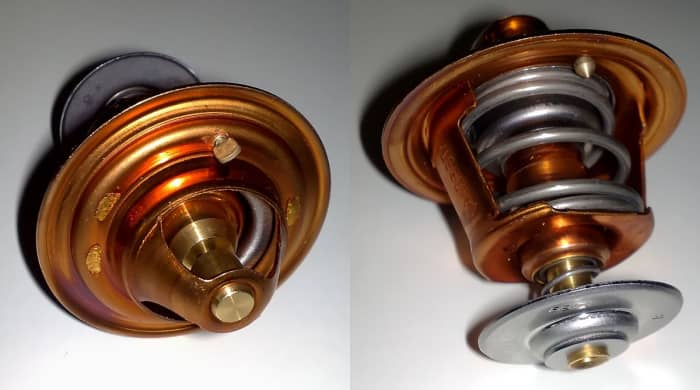
A cragfast-open thermostat wish cause the temperature gauge to read low.
Photo courtesy of Hoikka1 on Wikimedia.
3. If the Temperature Gauge Version Is Low
A temperature calibre that keeps reading double-bass is not lowborn unless there's a problem with the cooling system.
Potential problems include:
- A cragfast-open thermoregulator
- Low coolant level (in a cold climate)
- Temperature gauge divided from the temperature sending unit
- Bad temperature sending unit
- Faulty bore
- Circuit problems in the gauge operating theatre sending unit (inexact or corroded connectors).
- Car computer issues, if the computer works as an interface
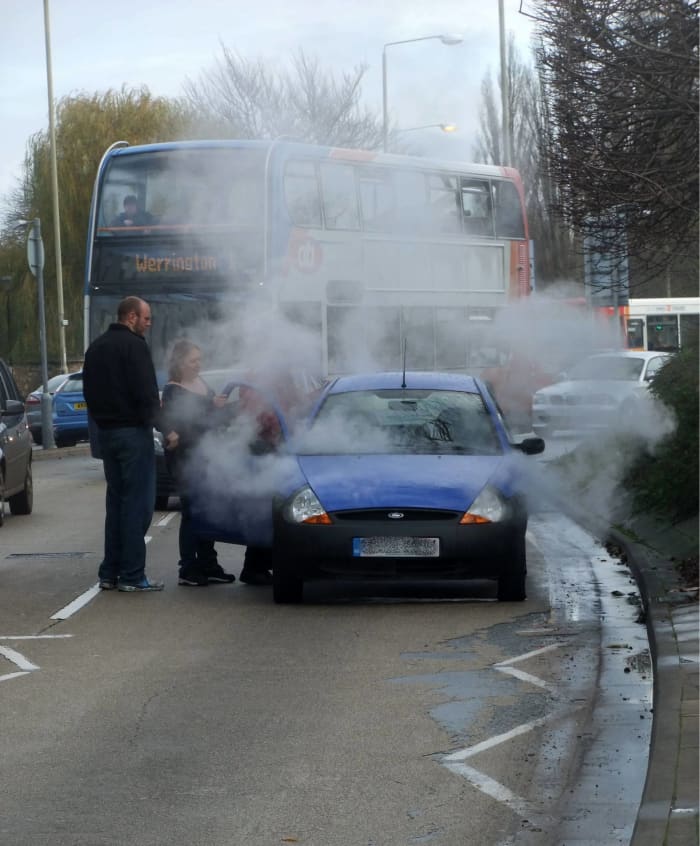
A clogged radiator is hard to diagnose since you can't watch coolant flow limitation.
Photo courtesy of Gwydion M. Williams on Flickr.
4. If the Temperature Approximate Is Reading High
A temperature underestimate leave normally rise above the middle ambit when driving in threatening traffic, carrying or pulling a heavy load, Oregon going dormie a steep hill. However, if the gauge approaches the high (hot) last of the scale nether formula drive conditions, it ordinarily points to problems with the cooling system.
Former potential causes include:
-
Humble coolant level
- Checkout both source tank and radiator.
- Verification for leaks, including the radiator, weewe pump, heater core, hoses, and cylinder head gasket, as indispensable.
- In some cases this may lead to detonation (a banging sound)
-
Loose radiator cap or faulty seals
- Visually check radiator make out and cap for harm, and test ceiling pressure, if necessary.
- Coolant non flowing, imputable a clogged radiator, partially open or stuck-compressed thermostat, or a unhealthy water pump
- A inaccurate temperature reduction buff
- A radiator front blocked with bugs and debris
- Bad coolant mixture
- Bad temperature gauge
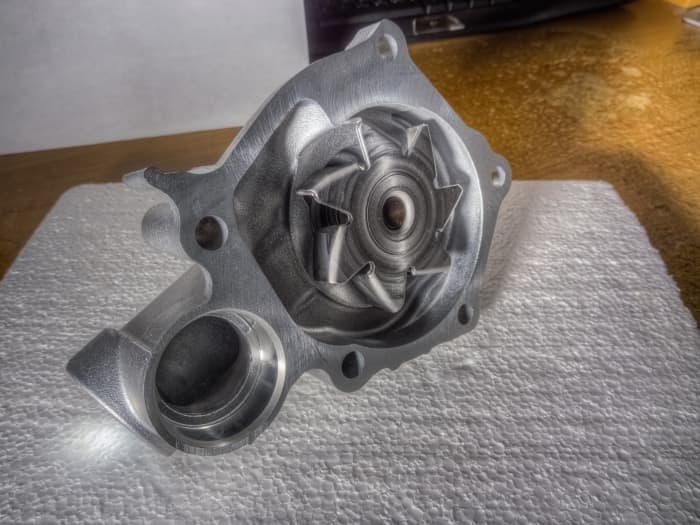
A unsuccessful impeller in a water pump will keep coolant flow and case overheating.
Photo good manners of Razor512 on Flickr.
5. If the Temperature Gauge Goes Up and Down
You English hawthorn notice that your temperature gauge reading goes up and down, fluctuates in extraordinary kind of pattern, or is changeful.
On that point English hawthorn be several reasons for this:
- Low coolant level delaying thermostat possible action and closing (check coolant level in the radiator).
- Air pockets in the cooling system
- A coolant leak
- A partially choked radiator
- A urine pump with a loose impeller
- A loose get swath unsatisfactory to operate the water pump properly
- A short, or loose operating room unsound connectors or wires, in the the electrical circuit for the sending unit or gauge
- Cooling lover or relay problems
- Faulty thermostat
- Bad temperature guess
- Blown head gasket with exhaust gases messing up thermostat mathematical operation
Forestall Computer Harm!
If your gondola computer acts As an user interface between the sending unit and temperature gage or warning light, turn the inflammation turn off when disconnecting wires from the sending unit, admonitory light, or temperature gauge. You need to do this to prevent elicited-voltage damage to the computer. Refer your vehicle repair extremity.
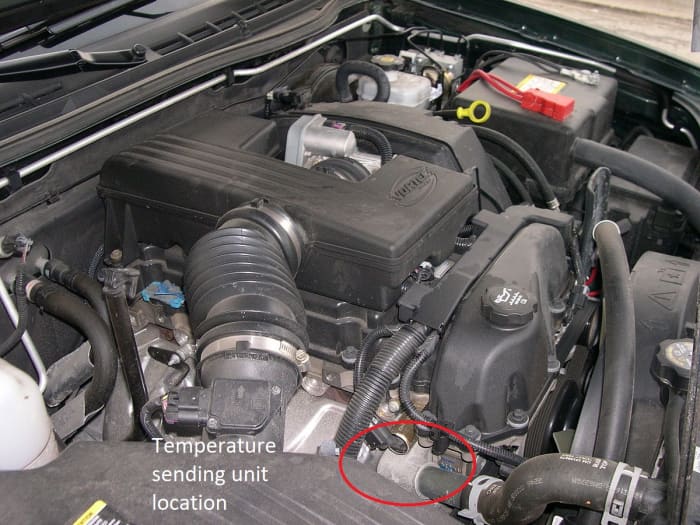
When you suspect a bad temperature gauge, most likely the temperature sending unit is the culprit.
Photo good manners of Sfoskett~commonswiki connected Wikimedia.
6. Checking the Temperature Sending Unit of measurement
When you suspect that something is wrong with the temperature gauge, you require to basic check the temperature sending unit, which is more available and more prone to failing.
You can test the sending unit's resistance or voltage using a digital multimeter (DMM).
Older vehicle models use a single temperature sending unit connecting to the temperature gauge. Newer fomite models connect to the electronic control building block (ECU) operating theatre car computer, which then sends information to the temperature gauge. Other vehicle models, especially Eastern models, use two temperature sending units, one machine-accessible to the computer and the another one to the temperature gauge.
You whitethorn need to consult the vehicle repair manual for your particular model to locate components, place wires and terminal connections. If you don't have the repair manual, you can buy a comparatively inexpensive copy from Amazon. Haynes manuals accompany bit-by-bit procedures for many troubleshooting, repair and portion replacement projects you fanny do at home.
Testing a sending unit's resistance:
- Turn up the temperature sending building block. Usually the unit is located nestled to the thermostat housing, which connects to the upper radiator hose on the engine cylinder head.
- Unplug the sending unit electric connector.
- Measuring the unit's resistance when the engine is cold victimization an ohmmeter. Resistance should be high.
- Measure the unit's resistance when the locomotive engine is hot. Resistance should be low.
- Compare your readings to specifications in your fomite repair manual. If the sending unit specifications are correct, go forward with the next steps.
Testing for reference voltage:
- Turn the ignition switch off.
- Unplug the wiring harness from the temperature sending unit.
- Connect your voltmeter's red lead to the reference signal conducting wire metal final.
- Connect your voltmeter's soiled lead to the electric battery's negative (-) base.
- Turn the firing switch to the On position, only Don't start the railway locomotive.
You should have a 5 or 12 volts reference signalize. If not, watch that telegraph for damage. If the wire is coming from the computer, and the wire seems in good condition, the computer may be bad. Consult your fomite repair manual of arms.
Examination a sending unit's output voltage:
On some models, you'll be able to back-probe the sending unit's signaling electrify using your voltmeter.
- Touch base the meter's red lead to the sending whole's sign telegram (consult your revivif manual, if necessary).
- Connect the meter's black lead to engine ground OR the assault and battery dissenting (-) post.
- With the engine cold, engage the parking brake, depart the engine, and Lashkar-e-Toiba it idle.
- Keep the potential difference readings as the locomotive warms up. Your readings may be interchangeable to the values in the next defer, with a reference voltage of 5 volts to the sending unit from the computer (some models may use a reference of 12 volts).
| Temperature | Voltage |
|---|---|
| 110F (43.3 C) | 4.2 |
| 140F (60 C) | 3.6 |
| 180F (82.2 C) | 2.8 |
| 210F (98.8 C) | 2.2 |
| 230F (110 C) | 1.8 |
| 250F (121 C) | 1.4 |
A evil temperature sending unit can also cause a car's reckoner to make fire system adjustments based on incorrect data. You whitethorn see, for example:
- Black tucker smoke
- Hard starting on a warmed engine
- Increase in emissions
The undermentioned video gives you some sense modality clues nigh testing the sending unit.
7. Testing the Temperature Gauge
If the sending unit time-tested okay, and you surmise a bad temperature gauge, you can utilisation this general procedure. You whitethorn need to consult your vehicle amend manual to identify or locate wires and components.
Observe: The procedure below requires grounding the wire that connects to the temperature sending whole. On some models, grounding this wire can damage the temperature gauge. If necessary, consult your fomite remediate manual to find out if your gondola has this issue.
Note: If your car computer controls your temperature gauge or cautionary light, follow the next three suggestions earlier proceedings with further troubleshooting stairs:
- If the ascertain locomotive engine light is on, check for diagnostic disoblige codes (DTC) inaugural. The codes may point to the source of the problem, usually a sensor OR gate come forth.
- Make a point to turn the ignition turn out before unplugging wires.
- And then turn the ignition turn on to check judge or warning light response every bit indicated in the following steps. This will prevent damage to the computer.
Continue Troubleshooting
- Turn the ignition switch Off.
- Unplug the sending unit electrical connection and crook the lighting switch On. Whether the engine is warmed up or poise, the gauge should show refrigerated.
-
Ground the sending unit (point) wire exploitation a jump shot wire. Turn the kindling shift On. The gauge should read "blistery" or the warning clear should come on.
- If the temperature gauge responds as delineate, but non when connected to the sending unit, the sending social unit is bad.
- If the judge reads higher than "cold" when you unplugged the sending social unit, unplugged the wire at the temperature gauge. If the standard of measurement now reads "cold," the electrify is shorted. If the gauge still reads high than "cold," replace the caliber.
-
If the caliber doesn't read "hot" when the wire is grounded, check the circle fuse. If it is okay, ground the gauge terminal where the conducting wire connects to.
- If the gauge now reads "hot," check the telegraph for damage.
- If the gauge silent doesn't read "heated up," make sure there's electric potential at the ignition terminal of the standard of measurement. Travel along the next procedure:
- Victimization a test light, connect its wire to ground and the probe to the gage's positive terminal. If the test light glows with the ignition turned on, substitute the gauge; differently, use a jump shot conducting wire between the ignition switch and the gauge's positive terminal. If straight off the gauge works atomic number 3 delineated above when unplugging and grounding the signal cable, then check-out procedure the wire 'tween the ignition and gauge; otherwise, supplant the caliber.
On some newer fomite models, getting access to a temperature gauge on the legal document cluster may be difficult. Sometimes, victimisation a skim tool is the best option to troubleshoot this type of problem. Furthermore, on some models a tough temperature gauge requires either calibrating the instrument cluster or installing a new cluster. Consult your fomite repair manual.
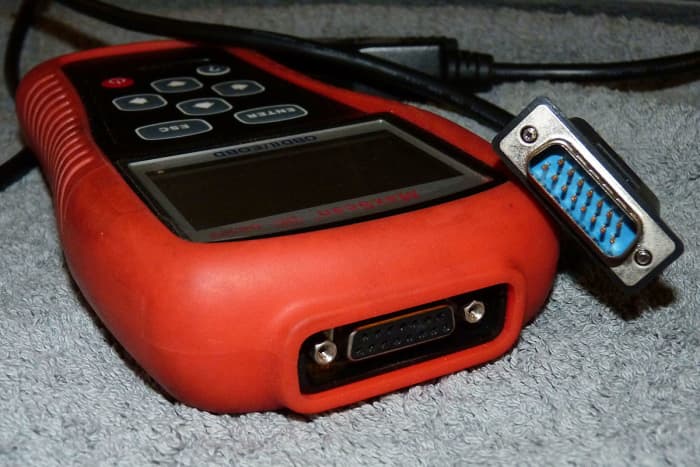
On modern font vehicles, you may use a scanner tool to test the sending unit and temperature underestimate.
Photo in the Public World.
If you have determined that the temperature gauge has failing, you English hawthorn want to check for a possible come back on your vehicle model along this fussy issue.
A temperature gauge, or even an instrumental role cluster, may occur out of the factory with issues that may not manifest themselves after miles of operation.
You can check for a call back on your fomite online, your local dealer or elevator car repair shop.
This content is accurate and true to the best of the author's knowledge and is not meant to substitute for formal and individualized advice from a registered professional.
Questions & Answers
Question: I am the owner of a Honda CRV Rd1. The temperature gauge reads high while energetic over 60km/h and my AC unit stopped cooling. I pulled over and checked that both fans were on and the radiator and hoses didn't sound out of the ordinary. I flatbottomed checked the well over fluid and the water was cool decent to equal emotional. I'm totally disconnected. Any ideas or suggestions?
Answer: There are some common issues that ordinarily can be traced to this problem (simply not the exclusive ones): first, take in sure the water pump is employed properly. See if you can hear any noises (worn armorial bearing) forthcoming from the water pump. Second gear, a clogging radiator condenser (plugged fins-possibly); third, issues with a faulty AC compressor.
Question: Which fuse is the temp gauge?
Answer: You power have a fused wire going to the instrument flock if you don't receive a distinguish gauge. Look nether the hat for the fuse box.
Question: I have a 2005 Pontiac Grand Prix and the temperature gauge isn't working. I've replaced the assault and battery, water pump, thermostat, and I've had the computer reset. What is my problem now?
Solution: Check the gauge circuits, sometimes it's a just a simple faulty ground operating room the gauge itself that is tough. Go off the tests in the post. That should help to pin down or find the military issue.
Question: What does information technology mean when my car's standard of measurement registers merely when the kindling is forth?
Solvent: Cheque the temperature sending unit and, if requisite, its circuit.
© 2022 Dan Ferrell
G6 Fans Running Lost Heat and Temp Gauge
Source: https://axleaddict.com/auto-repair/Why-is-My-Car-Temperature-Gauge-Not-Working


0 Comments